
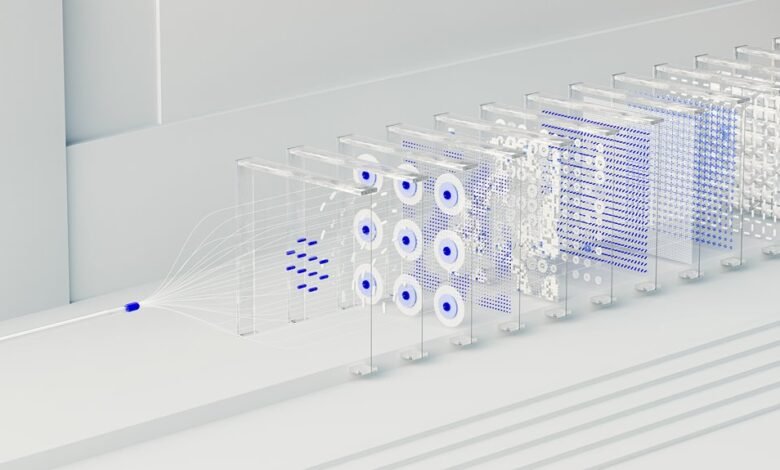
The Hyper Flow 971991551 Neural Node embodies a distributed, event-driven approach to real-time data fusion and decision-making. Its modular architecture enables scalable resilience and precise interoperation among units. Emphasis rests on safety, security, and efficiency in demanding environments, with autonomous coordination under human-centric governance. The design prompts questions about interoperability, governance, and assurance mechanisms. What practical constraints and integration paths must be navigated to realize its potential across domains?
What Is the Hyper Flow 971991551 Neural Node
The Hyper Flow 971991551 Neural Node represents a conceptual model that integrates high-speed, adaptive processing with distributed network topology to achieve real-time data fusion and decision-making. It embodies modular precision, scalable resilience, and autonomous coordination, enabling responsive systems across domains. Two word idea1, two word idea2, appear as guiding motifs, underscoring freedom through disciplined innovation and pragmatic exploration.
How the Modular Architecture Powers Real-Time AI
The modular architecture of the Hyper Flow 971991551 Neural Node enables real-time AI by decomposing complex tasks into interoperable, specialized units that synchronize through a lightweight, event-driven fabric. This configuration reveals scalability patterns and resilience, balancing concurrent workloads without central bottlenecks. Latency optimization arises from localized processing, parallel coordination, and predictive queuing, ensuring responsive, adaptable performance across dynamic workloads and free-form exploratory use.
Safety, Security, and Efficiency in Demanding Environments
A disciplined framework fosters modular containment, continuous verification, and adaptive efficiency, aligning autonomous performance with human-centric governance while preserving analytical detachment and innovative resilience.
Practical Use Cases and Integration Path for Developers
Practical use cases for Hyper Flow 971991551 Neural Node span from high-assurance automation in hazardous environments to adaptive orchestration of complex workflows, where developers leverage modular containment and verifiable decision-making to minimize risk.
In disaster response and edge computing contexts, integration emphasizes interoperability, robust monitoring, and incremental deployment, enabling scalable, transparent enhancements without compromising autonomy or security.
Conclusion
The Hyper Flow 971991551 Neural Node represents a rigorous convergence of modular design and distributed orchestration, delivering real-time AI with disciplined innovation. Its event-driven fabric enables scalable, resilient workflows while maintaining transparency and security under human-centric governance. An intriguing stat underscores its impact: systems leveraging modular, interoperable units reduce integration time by up to 40% compared to monolithic approaches. This architecture, meticulously engineered, supports autonomous coordination and pragmatic exploration, unlocking adaptive capabilities across demanding environments.